If Your Roof
Shows orange rust at the laps but the steel feels firm
Rust gets brushed to firm steel and primed, the laps get fabric, and the whole field is coated.
Start WithMetal Roof Coating

Commercial Metal Roofs · Jessamine County
We coat commercial metal roofs in Nicholasville and nearby towns. Screws, laps, and rust get fixed first, then primer and field coats go on over the panels.
Start from what the panels look like today. Each card names a roof condition we find on Nicholasville buildings and the job that fits it.
Rust gets brushed to firm steel and primed, the laps get fabric, and the whole field is coated.
Backed-out screws are driven down or upsized, each head is capped, and a white topcoat follows.
Low-slope metal with ponding end laps needs a coating that keeps its film under standing water.
Foam sprayed over the panel ribs adds insulation, then a topcoat shields it from the sun.
Perforated steel and weak purlins need new panels or structural repair before any coating goes on.
Five steps, in the order they happen on the roof. Inspection comes first because the panels decide what the job needs.
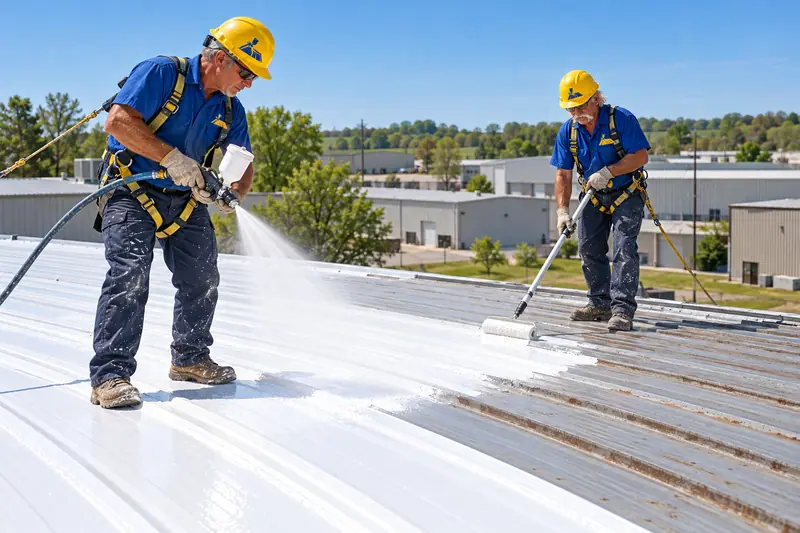
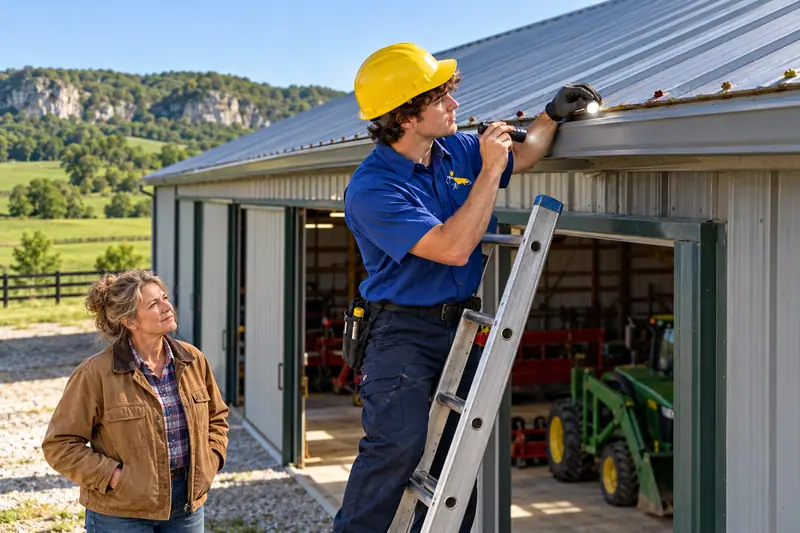
A roofer walks every panel run, probes rust at laps and cut edges, checks screws across sample rows, and photographs skylight panels, curbs, and gutters. Ceiling stains inside get matched to the spot above them.
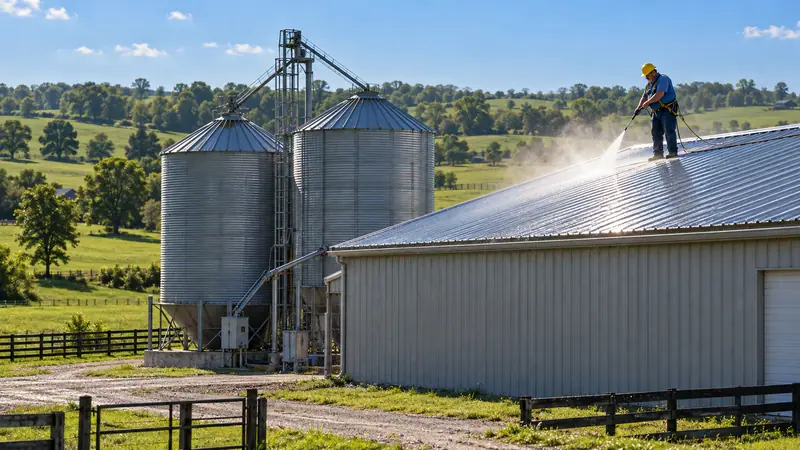
Pressure washing strips dirt, chalk, and mildew from the panels and gutters. Scale at laps and screws is brushed or ground down to firm steel, then spot-primed with a rust-inhibiting primer.
Loose screws are driven down, stripped ones are swapped for oversized replacements, and old empty holes are plugged. Rusted-through panels and brittle skylight panels are replaced before coating starts.
Polyester fabric or seam tape is set in coating along side laps, end laps, ridge caps, and trim joints. Pipe boots and HVAC curbs get the same reinforced detail.
Base and top coats go on by spray or roller to a set dry film thickness. Thickness is gauged as the work moves, and thin spots are touched up before the crew packs up.
Each card lists the roof conditions that have to be true before that system goes on. Open a service for its prep, options, and process.
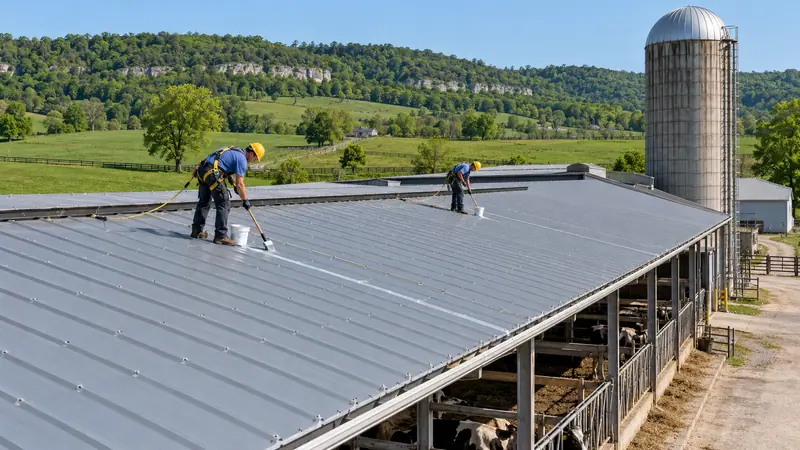
Exposed-fastener R-panel and older standing seam on shops, warehouses, churches, and barns. Laps, screws, and trim get sealed before primer and field coats cover the panels.

Low-slope metal and flat sections behind a parapet, where water sits at end laps or near drains. Silicone holds up under ponding that would soften an acrylic topcoat.
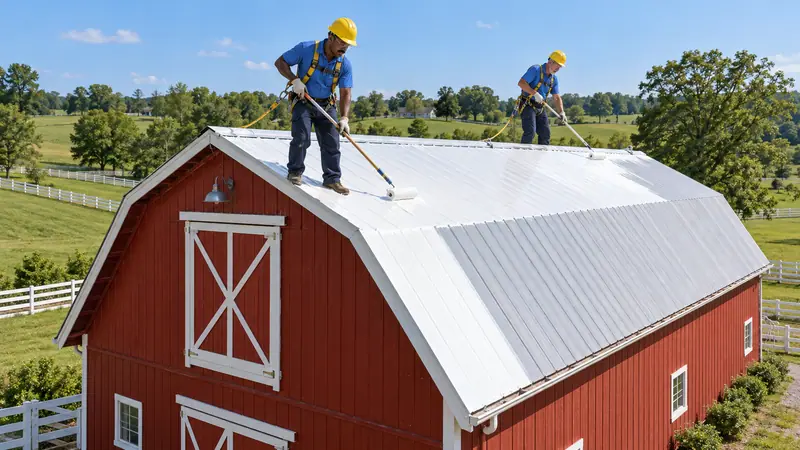
Pitched exposed-fastener roofs that shed water fast. Acrylic stays cleaner than silicone, bonds to many older coatings, and goes on as a bright white topcoat.
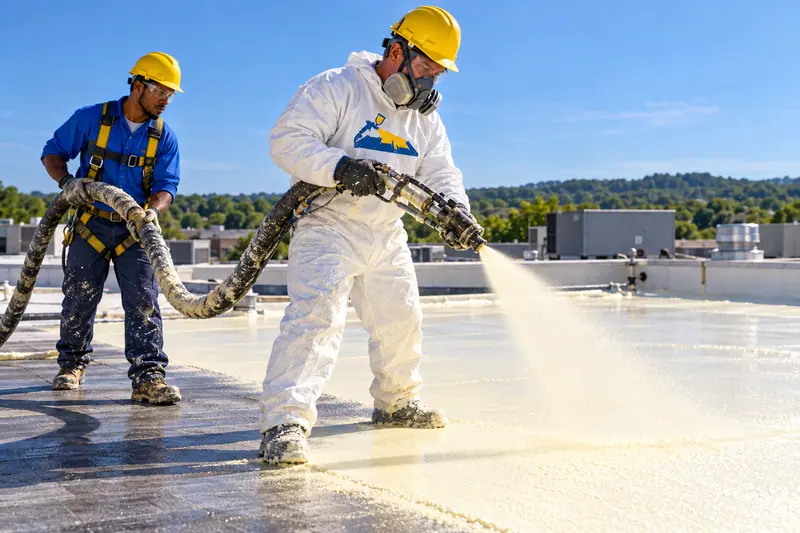
Heated or cooled metal buildings that need insulation along with leak repair. Foam fills the panel ribs and can be tapered to steer water toward the gutters.
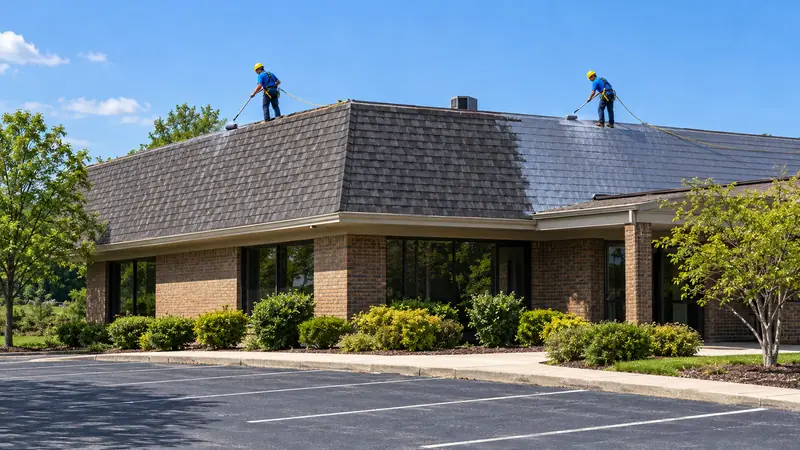
Asphalt shingle roofs on offices, churches, and strip centers where the tabs still lie flat. A narrow inspection decides it, and failed shingles mean replacement instead.
Call and tell us where the ceiling stain sits and how long it has been there. That points the roof walk straight to the panel run above it.
Each pair shows a part of a metal roof that wears out and what a coating does about it.
Every screw head is capped with sealant or brush-grade coating, so water stops following the shank into the building. The panels stay in place with no tear-off.
Fabric set in coating bridges the joint and stretches as steel heats in summer and shrinks on cold nights, keeping the lap closed through the swing.
A white topcoat reflects sunlight that the faded panel absorbed. Air-conditioned space under the roof gains the most; unheated barns gain comfort more than savings.
Coating reuses the steel already on the purlins, keeps the building open, and skips the tear-off and disposal that re-paneling brings, as long as most panels are solid.
These are the conditions that bring owners to us, grouped by what causes them.
Shops, warehouses, campus buildings, and farm barns in the towns below are where we coat metal roofs most. Building somewhere else? Call us or send us a message.
Pre-engineered steel buildings with exposed-fastener panels and long eave gutters.
Occupied buildings where air intakes, entrances, and schedules come first.
Barns, sheds, and metal shops on open ground.
Short answers to what owners ask first. The full question list covers rust, permits, weather, and cost.
It puts a continuous rubbery skin over the panels, so rain can no longer reach the screw holes, laps, and seams where metal roofs leak.
Because that skin stretches, it stays closed as the steel grows in July heat and shrinks on January nights. A light topcoat also reflects sun the old paint absorbed.
They can, and leaks at those spots are often why owners call in the first place.
Brittle fiberglass panels are replaced, ridge closures are re-fastened and sealed, cracked pipe boots are wrapped or replaced, and rusty curb bases are primed and reinforced so each detail ties into the field coat.
Most businesses stay open, since nothing is torn off and the work happens on top of the panels.
Plan for short rooftop unit shutdowns near intakes, coned areas under the eaves where hoses run, cars moved away from spray zones on windy days, and an agreed ladder or lift spot. Dock doors can rotate as the work crosses the roof.
In most cases it is, because the steel already on the purlins stays in place and there is no tear-off, disposal, or open roof.
That holds while most panels are solid under the rust. Where a few have rusted through, those get replaced and the rest coated; widespread perforation points to re-paneling instead.
Yes. Hay barns, equipment sheds, and shop buildings get the same rust, screw, and lap work as a warehouse.
Livestock barns add one step: the panel undersides are checked for condensation and ammonia damage before the top is sealed. Open-sided sheds get their eave and rake trim re-fastened first, since wind lifts it.
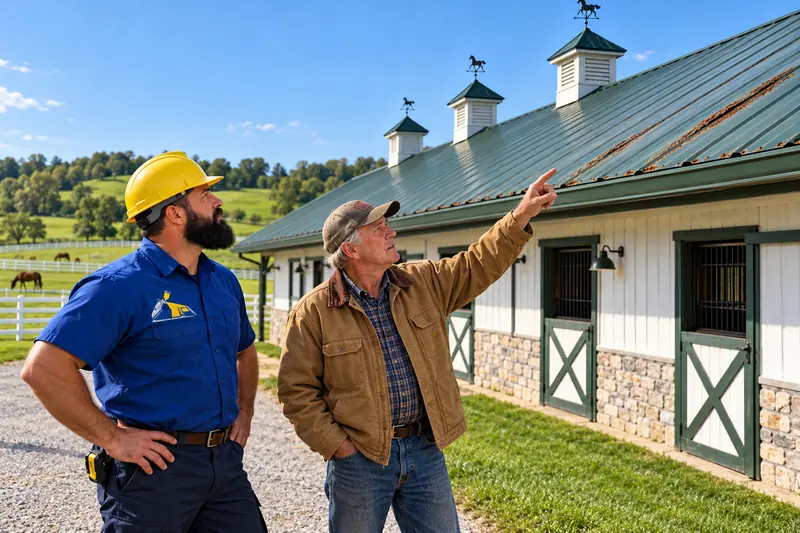
Send us the roof size and condition, or call and describe where it leaks. Inspection comes first on every job.
Leave a name and number and we will call you back about the building.
Or call now: (859) 204-8094